
It starts with a client request that sounds perfectly manageable: “Can you automate our lead intake process?” By noon, that single request has spawned three support tickets, a scope dispute, and a billing conversation nobody planned. A deadline slips. A frustrated email arrives. Your team scrambles — and somehow, this counts as a normal day.
What just happened is operational risk in action — not the kind that lives in a bank compliance manual, but the kind embedded in project handoffs, undocumented workflows, and overloaded inboxes. You probably don’t call it risk. You call it chaos, hustle, or just part of the job. Naming it differently, though, doesn’t reduce what it costs you every week.
So what is operational risk management, and what does a practical version look like for your agency — one with clear role splits, documented SLAs, and real escalation paths instead of improvised scrambles? This article lays it out: what ORM actually is, the five risk types you’re already carrying, a four-step process you can apply now, and how SyteWide’s managed systems layer makes all of it sustainable.
Key Takeaways
-
Operational risk covers any breakdown in people, processes, systems, or external events that disrupts daily operations — well beyond IT outages.
-
ORM is a recurring four-step cycle: identify, assess, mitigate, and monitor.
-
Five distinct risk types affect your agency, most already visible in day-to-day operations.
-
The right tools and systems — not good intentions alone — are what make ORM sustainable over time.
-
SyteWide’s managed systems layer and tools like SyteOps and Trustily directly address the most common agency-level operational risks.
What Is Operational Risk Management — And Why Agencies Keep Getting It Wrong
Operational risk is the potential for loss — financial, reputational, or relational — arising from failed internal processes, system breakdowns, human errors, or external events that disrupt daily operations. Unlike market or credit risk, which are primarily financial in nature, operational risk lives inside your workflows, your team structure, and your tech stack. For agencies and consulting firms, it comes down to one practical question: who does what, in which tool, and what breaks when that chain snaps?
The scenarios will feel familiar. A campaign approval workflow has no documented steps, so account managers interpret client goals differently each time. Off-brand creative goes live. That’s process risk. A client’s CRM stops syncing because someone rotated API credentials without logging the change. Three days of leads disappear. That’s systems risk. These aren’t edge cases — they happen routinely at agencies that haven’t yet named what they’re dealing with.
One principle from the U.S. Department of Defense’s ORM framework applies directly:
“Accept risk only when benefits outweigh costs, and make risk decisions at the right level by the right people.”
That’s not about eliminating every risk. It’s about making tradeoffs deliberately, not by accident.
Operational Risk Management (ORM) is the structured, recurring process of identifying, assessing, mitigating, and monitoring those risks — consistently, not just after something catches fire. Some 76% of organizations are running or planning enterprise risk management programs. Companies using structured ORM approaches — as outlined in research on Identifying and Estimating Cybersecurity risk frameworks — report a 40% reduction in assessment time and a 60% improvement in risk identification accuracy. ORM isn’t a compliance exercise — it’s the discipline that lets your business grow without the chaos scaling right alongside it.
The Five Types of Operational Risk You’re Already Living With

Your agency isn’t short on risk — just short on a vocabulary for naming it. Once you classify what’s happening, managing it becomes far more workable. These five ORM risk categories aren’t theoretical — you’ve almost certainly encountered every one of them in real project lifecycles.
-
People Risk — A senior strategist leaves mid-project with zero documentation. Their process knowledge walks out with them, and whoever steps in starts completely from scratch. The client relationship absorbs the disruption.
-
Process Risk — Campaign intake lacks a standardized brief template, so account managers interpret client goals differently each time. Rework accumulates, scope disputes follow, and questions about value start appearing in client emails.
-
Systems Risk — A WordPress plugin update breaks an automation sending onboarding emails. Nobody knew that automation existed until clients started asking why they hadn’t heard from your team.
-
External Events Risk — A third-party vendor goes offline during a major product launch with no SLA and no contingency plan. The launch stalls while your account manager fields urgent client messages instead of celebrating results.
-
Legal and Compliance Risk — A client in a regulated industry shares data through a channel that creates a contract-level compliance exposure. Nobody catches it until a review surfaces the problem weeks later.
Every one of these is manageable — but only if you can see it before it blows up. That clarity starts with one honest question about your operations: “Where have we dropped the ball in the last 90 days?”
The Four-Step ORM Process That Actually Works in Practice
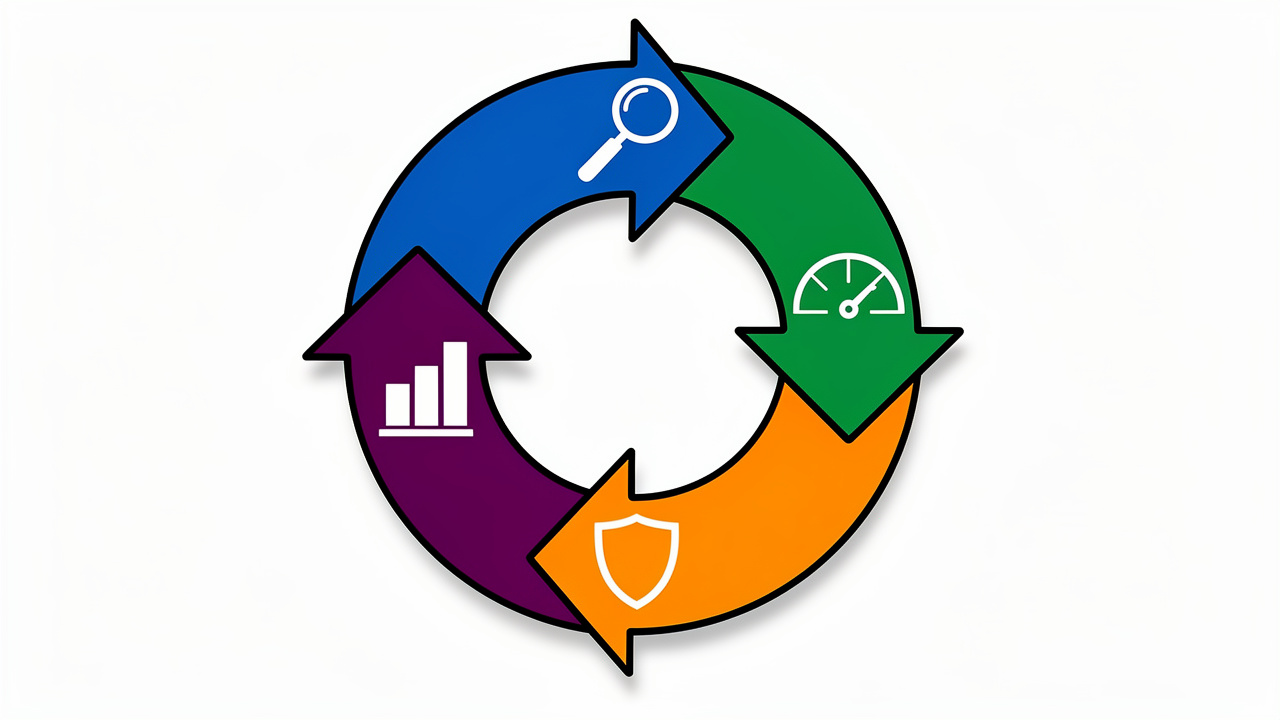
ORM follows a structured cycle — and cycle is the key word. This isn’t a one-time audit you complete and file away. It’s a repeating discipline, and the more consistently you run it, the less you’ll be running it in full crisis mode.
Step 1 — Identify: Map where things can break. Walk a complete project lifecycle — from lead intake to final invoice — and ask where handoffs have historically failed. If you haven’t named a risk, you can’t manage it. Team interviews, process walkthroughs, and checklist reviews are your tools here.
Step 2 — Assess: For each identified risk, evaluate two factors: likelihood of occurrence and severity of impact. Multiplying those gives you a prioritized list. Focus your energy on high-probability, high-impact items first — not every risk deserves equal attention or resources.
Step 3 — Mitigate: Deploy controls. A standardized brief template addresses process risk — an approach consistent with the Transit Cybersecurity Framework Community Profile’s emphasis on structured controls mapped to specific operational risk categories. Documented credentials in a shared vault address systems risk. An automated follow-up sequence catches dropped leads before clients notice. The goal isn’t zero risk — it’s manageable risk built into the workflow rather than dependent on individual memory.
Step 4 — Monitor and Report: Track whether your controls are actually holding. Assign owners. Set checkpoints. Build reporting so leadership sees the risk picture without having to manually dig for it.
“ORM isn’t a project with a finish line. It’s a discipline built into how the business runs.”
You might handle Steps 1 through 3 reasonably well. Step 4 is where ORM typically unravels — there’s no consistent system for knowing whether last month’s fix is still working.
How SyteWide Fits Into Your ORM Workflow

Monitoring and reporting is where most agency ORM programs collapse quietly. There’s no repeatable system for tracking what’s breaking, who owns the fix, or whether a control set up last quarter is still functioning.
SyteWide’s managed systems layer closes that gap. It connects your existing tools, standardizes workflows, and provides operational visibility without a full-time ops hire. SyteOps specifically delivers centralized governance over WordPress automations — including safer user and role management, backup and restore, and REST API restrictions — converting fragile setups into infrastructure you can actually audit and trust, addressing the kind of monitoring gaps documented in research on Challenges to the monitoring of deployed automated systems. The next section covers how this extends across your full operational risk picture.
How Tools Like SyteWide Help You Build ORM Into Daily Operations

You probably won’t build a formal ORM department with a Chief Risk Officer and quarterly risk committees. What you will do is invest in better systems — ones that fit your existing stack and actually reduce the daily strain of running the business. That’s exactly the operating reality SyteWide is designed for.
Its managed systems layer targets the most common agency-level operational risks directly:
-
Intelligent Call Handling reduces people and process risk around missed leads and inconsistent intake. AI-powered routing, spam filtering, and voicemail handling mean no opportunity slips through simply because a human wasn’t available to answer.
-
Data Intake and CRM Integration eliminates manual entry errors by creating automated, structured data flows directly into the CRM — establishing a single source of truth and cutting the risk of bad data steering decisions in the wrong direction.
-
Automated Follow-Up and Qualification replaces inconsistent individual habits with standardized, repeatable cadences, so lead response stops depending on who happened to have bandwidth that afternoon.
-
SyteOps addresses systems and governance risk in WordPress environments: centralized configuration management, safer user and role handling, REST API restrictions, backup and restore, and clear automation governance. Fragile setups become reliable, auditable infrastructure.
-
Trustily manages reputational risk by automating review requests and monitoring incoming feedback — so you catch negative sentiment before it compounds into a visible public problem.
SyteWide works with your existing tech stack in done-for-you, done-with-you, or DIY modes — reducing vendor lock-in risk and staying maintainable as your business evolves.
“Tools don’t fix broken processes. But the right tools, properly integrated, make it much harder for those processes to stay broken.”
Conclusion
The support tickets, the scope creep, the scramble before a client call — that’s not bad luck. It’s unmapped operational risk, and it’s fixable.
ORM gives you a four-step structure you can apply starting now: identify what’s breaking, assess the impact, build controls, and track whether they hold. You don’t need a risk committee to get started — you need a clear-eyed look at your operations and the willingness to own the gaps.
Pick one area where something went sideways in the last 90 days. Map the risk. Build one control. Then build another.
If you want operational reliability built into your systems rather than managed entirely by hand, SyteWide is worth exploring. Stop firefighting — and start building.
Frequently asked questions
What is operational risk management?
Operational risk management (ORM) is the structured, recurring process of identifying, assessing, mitigating, and monitoring risks that arise from failed internal processes, system breakdowns, human errors, or external events that disrupt daily operations.
What are the five types of operational risk?
The five types are: People Risk (loss of key personnel and knowledge), Process Risk (lack of standardized workflows), Systems Risk (technology failures and breakdowns), External Events Risk (third-party vendor issues), and Legal and Compliance Risk (regulatory exposure from improper data handling).
What are the four steps of the ORM process?
The four steps are: Identify (map where things can break), Assess (evaluate likelihood and severity of each risk), Mitigate (deploy controls like templates and documentation), and Monitor and Report (track whether controls are working with assigned owners and checkpoints).
How do you start an operational risk management program without a dedicated team?
Apply the four-step cycle to one operational area at a time by picking the highest-frequency failure point in your workflow and building one control for it, using tools to codify that control so it doesn't depend on individual memory.
What is the difference between operational risk and operational risk management?
Operational risk is the potential for loss from people, processes, systems, or external events disrupting operations, while operational risk management is the structured, recurring practice of identifying, assessing, mitigating, and monitoring those risks.
What are the most common operational risks for digital agencies?
Process risk (no standardized workflows) tops the list, followed by people risk (key-person dependency without documentation), systems risk (fragile WordPress environments and undocumented automations), and reputational risk from absent review management.
How does SyteWide help with operational risk management?
SyteWide's managed systems layer provides intelligent call handling, automated CRM integration, standardized follow-up sequences, SyteOps for WordPress governance and backup, and Trustily for review monitoring—directly addressing people, process, systems, and reputational risks.
What benefits do structured ORM approaches provide?
Companies using structured ORM approaches report a 40% reduction in assessment time and a 60% improvement in risk identification accuracy, according to research on cybersecurity risk frameworks.
What benefits does structured ORM provide?
Companies using structured ORM approaches report a 40% reduction in assessment time and a 60% improvement in risk identification accuracy, and 76% of organizations are running or planning enterprise risk management programs.
What benefits do companies see from structured ORM approaches?
Companies using structured ORM approaches report a 40% reduction in assessment time and a 60% improvement in risk identification accuracy, according to research on cybersecurity risk frameworks cited in the article.
How can agencies start implementing ORM without a dedicated risk team?
Apply the four-step cycle to one operational area at a time, starting with the highest-frequency failure point in your workflow, and build one control for it using tools that don't depend on individual memory to function.